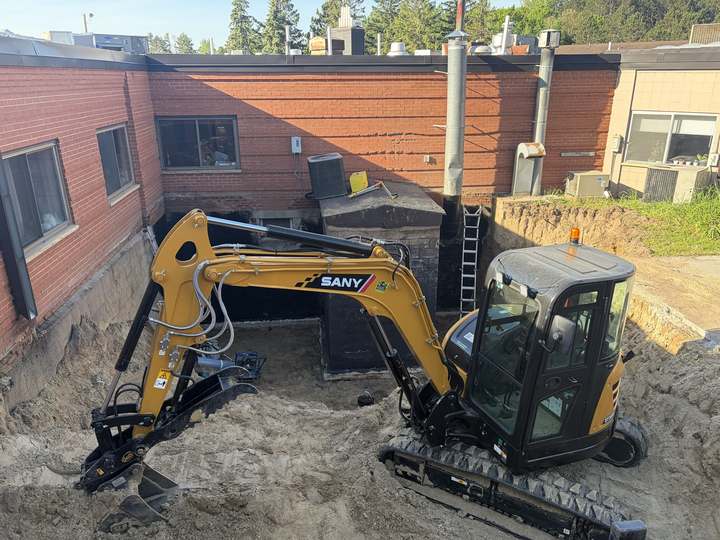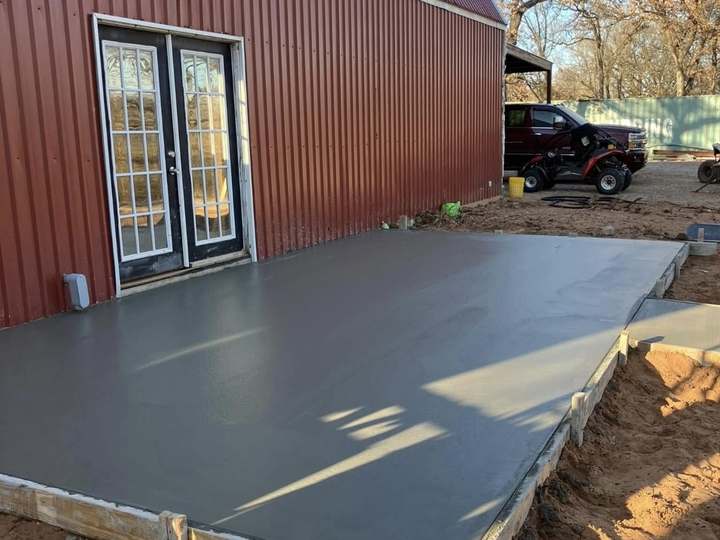


Trenching for water, sewer, and septic
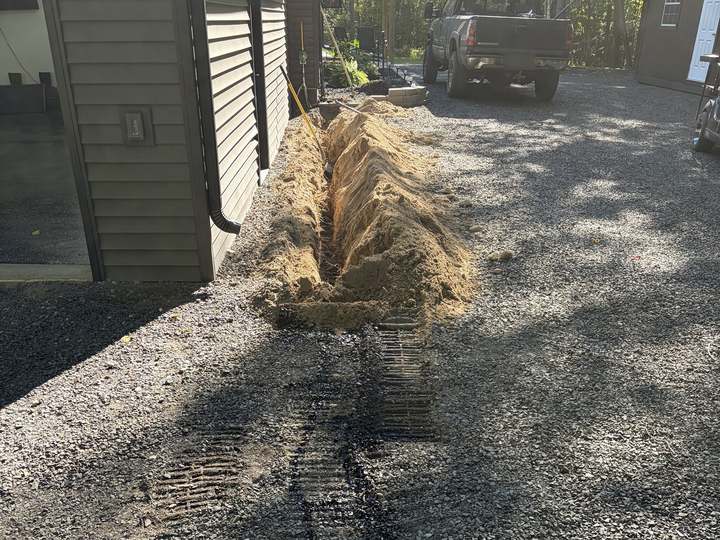
A trench looks simple until it isn't. It has to hit the depth and slope the line needs, stay clear of the other lines in the ground, and get backfilled so the yard or the driveway doesn't sink over it next spring.
Water lines go deep enough to stay below the frost line. Sewer and septic lines need a steady fall so they drain. We dig to the depth and grade the job calls for, clean the bottom of the trench so the pipe isn't sitting on rocks, and backfill in lifts when the line is in.
When it can't wait
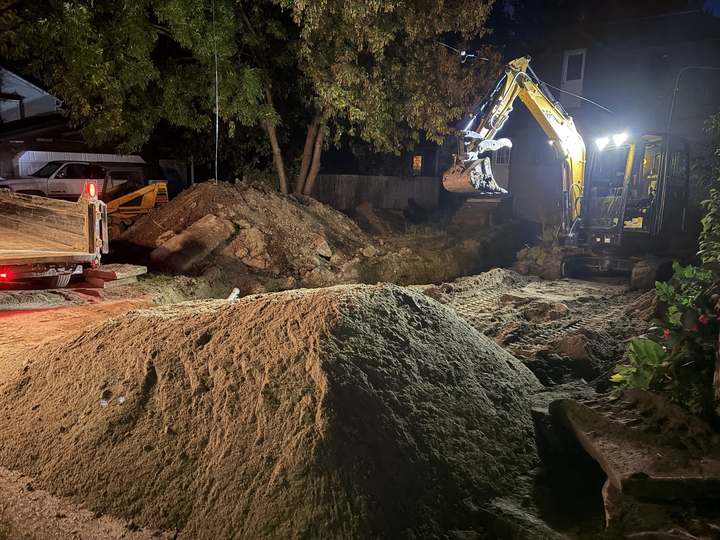
Some jobs don't wait for daylight. A broken water line or a failed sewer connection can shut a house down, so the dig starts as soon as the lines are marked and the ground is safe to open.
The night photos on this page are from an emergency water and septic tie-in: work lights up, dump trailer staged in the alley, and the excavator digging to the tie-in.


Trench safety
Trench walls give way without warning, and a cubic yard of dirt weighs about as much as a small car. Federal safety rules require a protective system, like sloping, benching, or a trench box, in any trench 5 feet deep or more unless it's cut in solid rock. We follow them, and we tape off open trenches so nobody walks into one.

Who does what
Connecting water and sewer lines is licensed plumbing work in Oklahoma, and septic systems go in under state environmental rules. We handle the excavation, work alongside the plumber or septic installer while the line goes in, then backfill and compact so the ground goes back the way it was.
What drives the price
Trenching is priced on length, depth, what the trench goes through, and what has to be put back. A straight run across an open yard is quick. A run under a driveway or through rock takes more time and more cleanup, and the concrete patch goes on the quote. Your quote spells out the length, the depth, and the restoration, so you know what you're paying for.